Decide what to be and go be it. – Avett Brothers, Head Full of Doubt/Road Full of Promise
My daughter loves animals. She collects stuffies, names each one, carries them to bed and writes short stories about their adventures. We sew up their “ouchies” when the dog gets ahold of one, they visit the “spa” conveniently located in our laundry room, and for special occasions they have salon appointments to brush and style their fur.
As she grows, her curiosity about animals is expanding. What do they eat and where do they live? We watch nature shows and listen to animal podcasts. She checks stacks of books out of the library. Her interest is insatiable. She wants to start a business, bringing animal facts (and the animals themselves) into elementary classrooms like hers, so that every kid can experience them.
You might think that her favorites are the cute ones, like most young girls. Something like puppies and cats or bunny rabbits, maybe deer. But no, this isn’t the case. She intentionally seeks out the animals that most others dislike or fear. She prefers snakes, bears, and wolves, foxes, toads and vultures, crows or mice. I’ve heard her explain that “People fear what they don’t understand.” and then encourage someone to do their research.
She worries about global warming and climate degradation. The impending impact to the animals in the world weighs on her heart. As a family we recycle, we pick up litter in the neighborhood. What more can we do? We have more immediate concerns, like next week’s 4th grade Spanish test and the book character project due tomorrow.
Despite my scattered brain, I try hard to take her concerns seriously and to encourage her curiosity. It starts as an off-hand suggestion, “Why don’t you do some research? Write down what you learn about the animals and their situations.” Her face lights up! Yes, this she can do. She fastidiously sets herself up with the laptop, a notebook and her favorite pen set just to the left. Every time I walk by, I glance over her shoulder to check her progress. Pages fill with notes: appearance, behaviors, habitat, diet, migration patterns and conservation status.
She brings me the sheafs of paper, overflowing with facts and figures. Each scrawled in her messy left-handed slanted script. She has amassed all of the data; collected and organized all of the facts. But so what?
In business school, we learned that effective leaders go beyond data collection. The best of the best, they take in the information and ask the crucial strategic question, “So what?” This line of strategic questioning challenges assumptions and pushes organizations towards deeper thinking. But I don’t think the question goes quite far enough.
It’s one thing to think about the data; what does it tell you? What does the data reveal about the patterns of the project, the trajectory of the projection? This is useful, for sure, but I would argue that the true question should be, “So what are we going to do about it?” This mindset then links the data, to the interpretation, and finally to the action. Data without tangible action remains just numbers and words on a page. Decisive action moves us forward; moves us closer to our goals.
When she brings me her notebook overflowing with notes about Indiana’s most endangered species, I ask her the same question. “So what are we going to do about it?” Her faces scrunches in concentration, consternation. I see her mind considering what she now knows and balancing that with her own capabilities and resources. After some time she comes back to me with an idea.
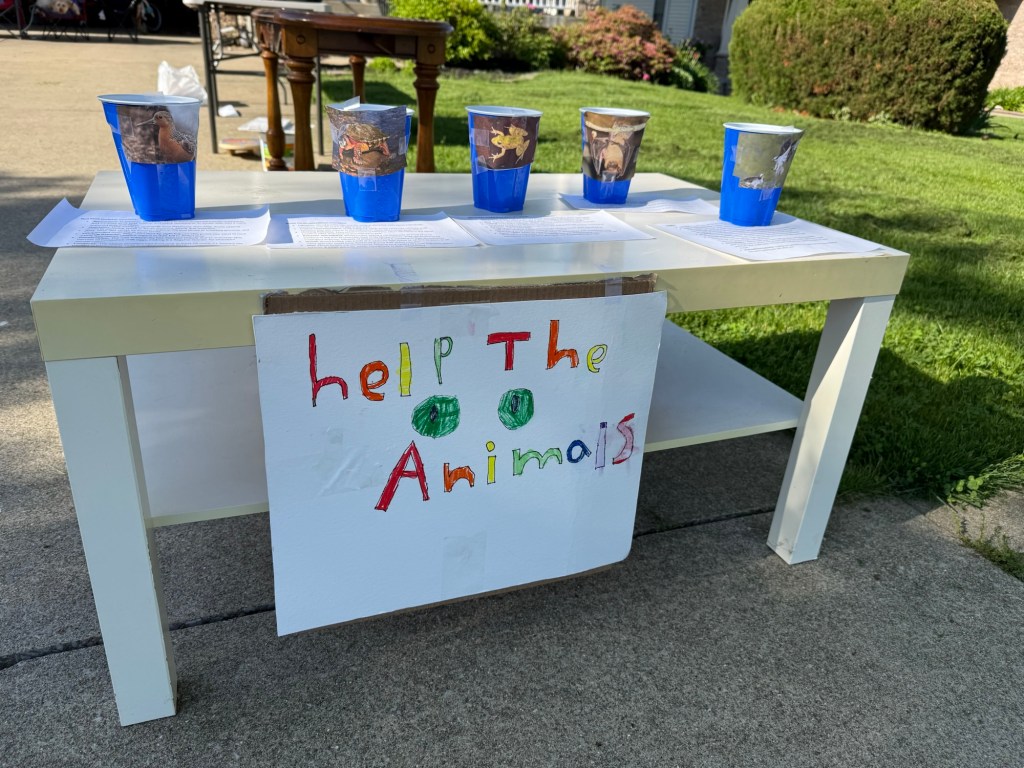
It takes money and resources to help the situation, so she decides to take the opportunity of our neighborhood garage sale to set-up an information table and collect donations. She prepares information booklets and donation cups, each labeled with the animal’s picture as well as their common and scientific names. She makes a poster and sets up the table that morning. At the end of the day, we count up the donations and make arrangements to deliver the money to the Indiana Department of Natural Resources.
I was immensely proud of her efforts. She saw a need, educated herself, and took action. She didn’t wait for someone else to fix the problem. She didn’t question or second guess her ability to make an impact. She demonstrated a bias for action towards goals that are important to her core values. I think she is going to be okay in the world.
Sometimes as Project Managers we can allow ourselves to question our efforts. Does this email really matter? Why do I keep notes of every meeting? No one reads my Gantt chart anyway. We can lull ourselves into a perspective that our work is little more than administrative noise. But it isn’t true. Our superpower is our bias for action, our ability to lean into complicated projects, to pick them apart into manageable pieces. We help the team see the forest for the trees, the interconnectedness of each step along the critical path. We take all of the project data, pull each thread together, and then enable the team to decide the next best action to take.
#Action

 Context Matters
Leave a comment